Event Branding Beyond the Logo

When people think about event branding, they often think about a logo.

A logo is important, of course. It’s usually the first visual element people see and often becomes the badge that represents the event. But the most memorable events are rarely defined by their logo alone.

The events that stay with us long after we’ve gone home are built around something much bigger. They create a consistent experience that can be seen, felt and recognised across every touchpoint.

Event branding isn’t just about how an event looks. It’s about how it feels.
A Brand Should Be Experienced, Not Just Seen

Attendees interact with an event long before they walk through the venue doors.

They might receive an invitation, browse a website, download an event app or engage with social media content. Every one of those moments shapes their perception of the event and builds anticipation. When branding is approached strategically, these touchpoints feel connected. Colours, typography, imagery, language and tone work together to create a coherent experience.

The logo becomes one part of a much larger story.

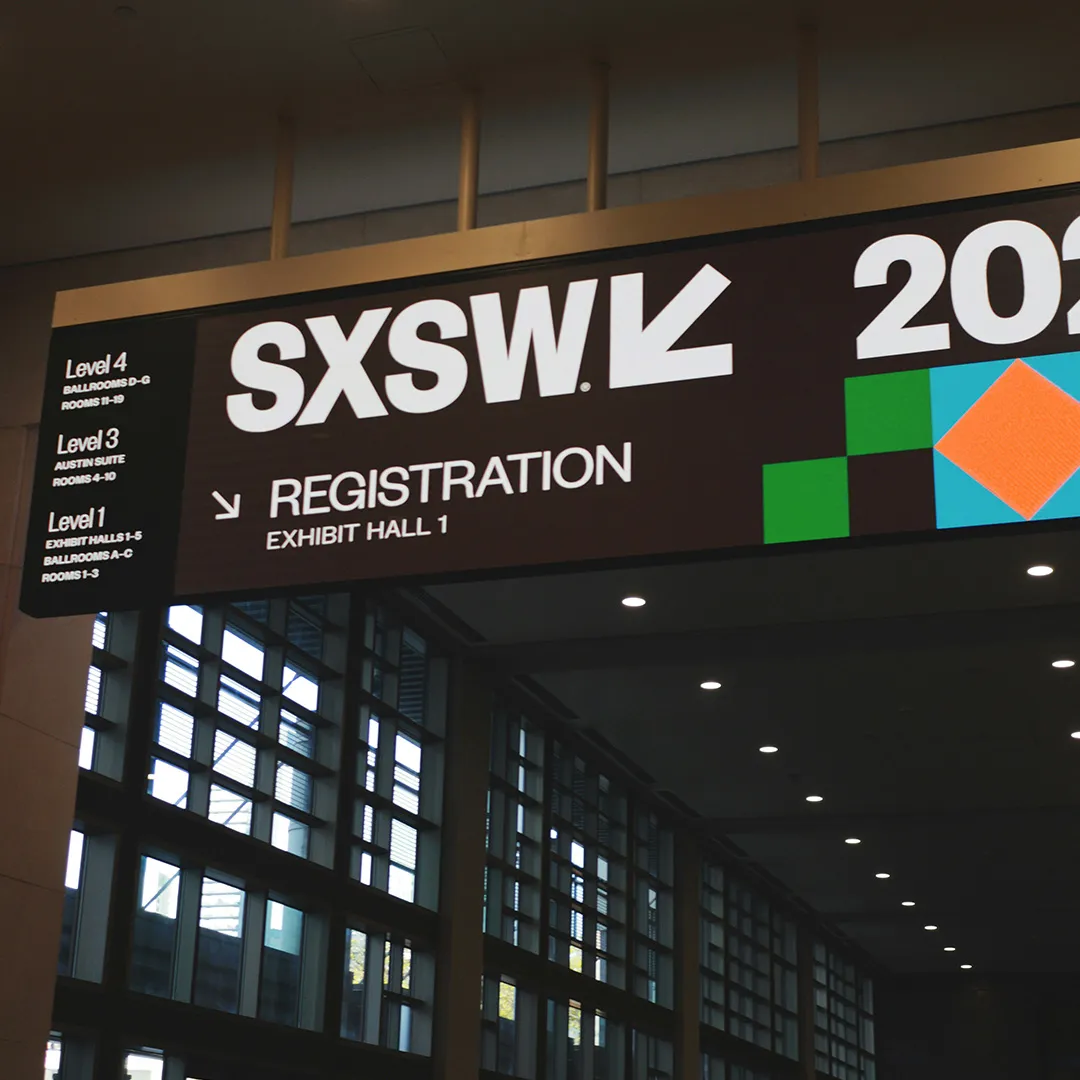
SXSW event registration signage suspended above a convention centre walkway, featuring bold branding, directional wayfinding and exhibition hall information for attendees.

The strongest event brands aren’t simply seen. They’re experienced.

Creating a Visual System

One of the biggest challenges in event design is maintaining consistency across dozens, sometimes hundreds, of individual assets.

A large conference might include:

  • Registration websites
  • Event apps
  • Digital signage
  • Wayfinding systems
  • Stage graphics
  • Presentation templates
  • Printed materials
  • Social media content
  • Video content
  • Recognition programmes

Without a clear visual system, the experience quickly becomes fragmented. Strong event branding creates a framework that allows all of these elements to feel connected while still being flexible enough to adapt to different formats and audiences.

Designing for the Environment

Unlike traditional branding, event branding exists within physical and digital spaces at the same time.

A colour palette that works beautifully on a website may need adjustment when applied to a large LED screen. Typography that feels elegant in print needs to remain readable from the back of a conference hall. Successful event branding considers how visual elements behave across different environments.

The goal isn’t simply consistency. It’s creating a seamless experience regardless of where attendees encounter the brand.

The Details Matter

Often it’s the smaller details that make an event feel polished and memorable.

A consistent icon style. Thoughtfully designed wayfinding.

Presentation slides that feel like part of the same experience as the stage graphics. Even simple elements such as registration confirmations and agenda layouts contribute to the overall perception of quality. Attendees may not consciously notice every detail, but they notice when everything works together.

Building Recognition and Trust

Consistency creates confidence.

When branding is applied thoughtfully across every touchpoint, attendees instinctively understand where they are and what belongs to the event. This reduces friction and helps people focus on the content, conversations and experiences that matter.

For event organisers, strong branding also creates long-term value. It builds recognition year after year and helps establish a reputation that attendees, sponsors and stakeholders can trust.

Beyond the Event

The most effective event brands don’t end when the event finishes.

Photography, video content, presentation materials and social media assets continue to extend the life of the experience long after attendees have returned home. When event branding is built as a system rather than a logo, these assets remain connected and continue telling the story.

That’s where branding begins to deliver real value.

Final Thoughts

A logo may start the conversation, but it’s rarely what people remember most.

People remember how an event made them feel. They remember the atmosphere, the clarity of the experience, the moments that felt considered and the details that made everything work seamlessly together.

Great event branding goes beyond visual identity. It creates a shared experience that brings every touchpoint together and helps audiences connect with the event in a meaningful way. Because the strongest event brands aren’t simply seen.

They’re experienced.

I’m Nick Farrow, a Senior Graphic Designer based in Brighton with over 30 years’ experience creating design for live experiences, presentations, digital platforms and brand communications. My work focuses on helping organisations turn complex ideas into clear, engaging visual systems that connect with their audience.

Find out more about my background and approach.

Planning an event that needs more than a logo?

Event branding works best when it becomes a complete visual system, connecting signage, screens, presentations, digital touchpoints and the wider audience journey.

I help organisations, agencies and event teams create clear, consistent design for conferences, recognition programmes and live experiences.