Why Every Successful Event Needs A Graphic Designer!

A successful event is made up of hundreds of moving parts.

There is the strategy, the content, the venue, the speakers, the screens, the signage, the app, the presentations, the agenda, the sponsors, the audience journey and all the last-minute changes that seem to arrive just when everything feels under control.

A good graphic designer helps bring all of that together. Not simply by making things look good, but by giving the event clarity, structure and a consistent visual language. Design helps people understand where they are, what is happening, what matters and how the whole experience connects. When design is considered properly, an event feels joined-up. When it is not, even a well-planned event can feel fragmented.
Design Should Be In The Room From The Start

One of the biggest mistakes in event planning is treating design as something that happens at the end.

The agenda has been written. The venue is booked. The screens are specified. The speakers are confirmed. Then someone asks, “Can we make this look nice?” By that point, design is being used as a finishing layer rather than a valuable part of the experience.

A strong event designer thinks much earlier than that. They think about the complete audience journey: how people arrive, what they see first and how they move through the venue., how content will appear on screen, how information will be understood and how the brand should feel across every touchpoint.

That is where design becomes much more powerful. It stops being decoration and starts becoming communication.

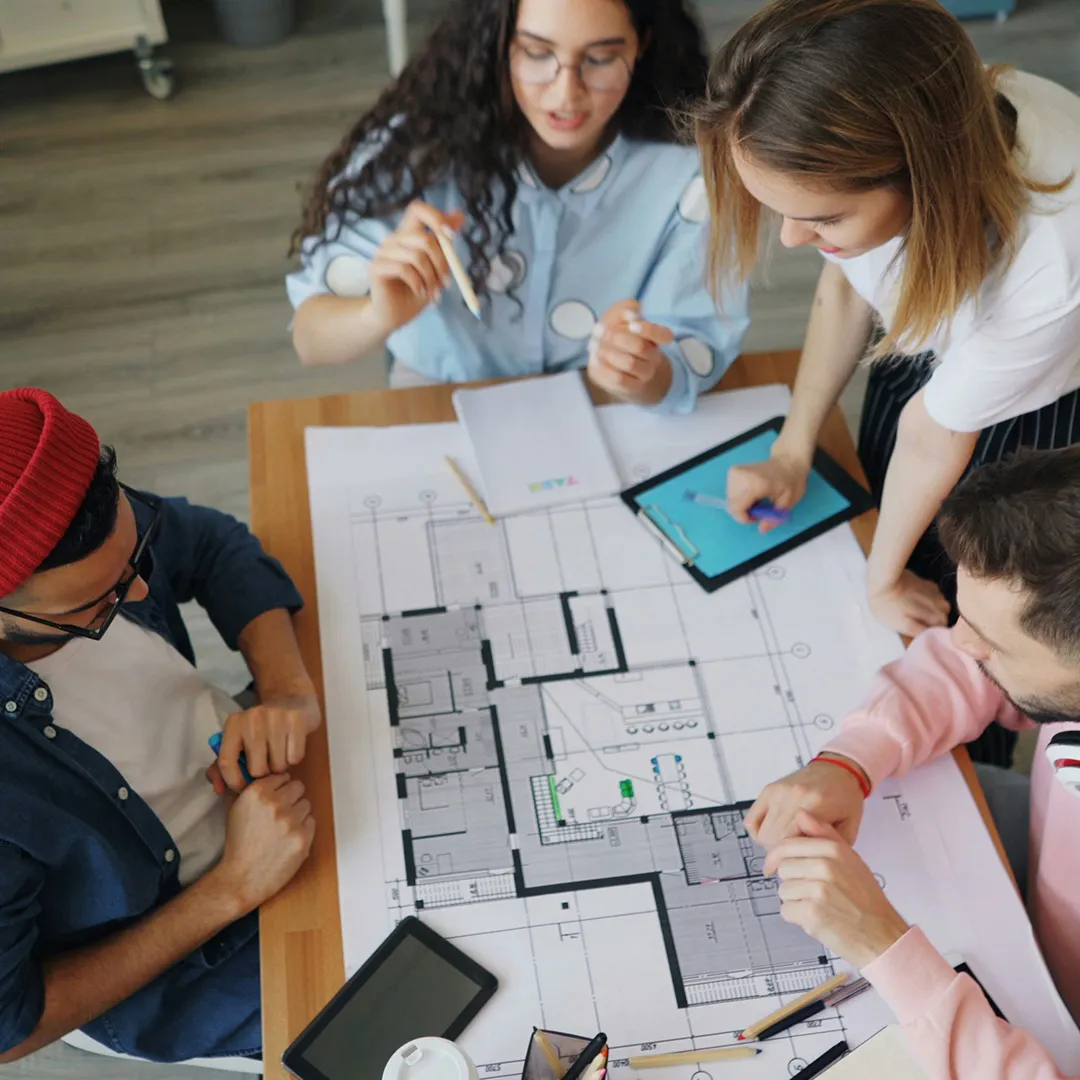
Creative team planning an event experience around printed layouts, notes and a tablet.

A good designer turns an event from a collection of assets into one clear, connected audience experience

The Advantage Of Having A Designer Involved

Events often contain a huge amount of information.

Agendas, speaker details, maps, holding screens, sponsor messages, presentation slides, digital signage, printed materials, event apps and social content all need to work together. A good graphic designer creates order. They build a visual system that can stretch across different formats without everything feeling disconnected. They create consistency, hierarchy and rhythm. They help make complex information easier to understand.

That might mean simplifying a busy agenda, designing clearer wayfinding, building a presentation template, creating a flexible event identity or making sure digital screens work properly in a live environment. The audience may not notice every design decision, but they will feel the benefit. They will find their way more easily. They will understand the content more quickly. They will feel like the event has been considered.

Design Helps The Audience Feel Looked After

Events can be busy, noisy and overwhelming.

People are arriving, checking in, reading screens, opening apps, finding rooms, scanning badges, following signs, listening to speakers and trying to absorb information in real time.

Good design reduces friction. It gives people simple visual cues. It helps them know where to go. It makes the agenda easier to read. It helps signage do its job. It makes screens more useful. It allows the audience to move through the experience with more confidence.

That matters. Because when people feel lost, rushed or confused, it affects how they experience the whole event. A good designer is always thinking about the person in the room, not just the asset on the screen.

Design Brings The Brand Into The Room

An event is often one of the most visible expressions of a brand, which is why event branding needs to work across every physical and digital touchpoint.

It is where a company, organisation or campaign becomes physical, digital and live. The brand is not just seen on a logo. It appears through the stage design, the slides, the signage, the app, the holding screens, the printed materials and the small details people interact with throughout the day.

A graphic designer helps bring that brand to life in a way that feels appropriate for the audience and the occasion. The balance is important. Too little design and the event can feel generic. Too much and it can become noisy or overworked. The best event design has presence without getting in the way. It supports the message, rather than competing with it.

The Pitfalls When Design Is Overlooked

The most obvious pitfall is inconsistency.

Different teams create different pieces. Presentations look different from signage. The app feels separate from the event identity. Sponsor assets compete for attention. Screens become cluttered. The event starts to feel like a collection of parts rather than one complete experience.

Another common pitfall is poor readability. This happens more often than it should. Text is too small. Contrast is too weak. Slides are too busy. Signage is hard to scan. Digital screens are treated like printed posters. Information appears in the wrong place or at the wrong size. These may sound like small details, but they affect the audience experience immediately.

There is also the risk of designing without understanding production. Event design has to work in the real world. Screens come in unusual ratios. Print has deadlines. Venues have restrictions. Content changes late. Files need to be supplied correctly. Assets need to be flexible enough to survive real event conditions. A design might look beautiful on a laptop, but if it cannot be delivered properly, it will not work for the event.

My Gartner Winners Circle case study shows how one design system was delivered across print, environmental graphics, presentations, digital content and event communications in four global destinations.

Good Design Makes An Event Feel Easier

The best event design often feels effortless.

People know where to go. The screens feel clear. The presentations support the message. The app feels useful. The signage makes sense. The brand feels present. The whole experience has a rhythm.

That does not happen by accident. It happens because someone has thought carefully about how the event should look, feel and function from the audience’s point of view. A graphic designer is vital because they turn planning into experience. They take the strategy, content and logistics of an event and make them visible, usable and memorable.

For any event where audience experience matters, design should never be an afterthought. It should be part of the conversation from the start.

Leaving Design Too Late Creates Pressure

When design is brought in late, it often becomes reactive.

The designer is asked to fix problems rather than help shape the experience. Assets are produced quickly. Visual decisions are rushed. Templates are built under pressure. There is less time to create a proper system. The result might still look acceptable, but it will rarely be as strong as it could have been.

Bringing design in earlier makes a big difference. It allows the designer to understand the event properly, plan the visual system, identify what needs to be created and think about how every touchpoint will connect.

It also helps the wider team. A clear design system makes decisions easier. It speeds up production. It gives everyone a shared direction. It helps last-minute changes feel manageable rather than chaotic.

When Should a Graphic Designer Join the Event Process?

Initial event briefing

The designer should understand the audience, objectives, venue, event format and communication priorities.

Creative concept development

The visual direction should be established before individual assets are produced.

Content planning

Agendas, speaker content, signage, presentations and digital touchpoints should be considered as one communication system.

Production planning

The designer should work with print, screen, digital and production suppliers to ensure the creative work can be delivered correctly.

Live delivery

For complex events, design support may continue onsite to manage late content changes, presentation updates and production requirements.

This would help the article target more practical searches around:

  • When to hire an event graphic designer
  • What does an event graphic designer do?
  • Graphic designer for conference planning
  • Event graphic design process
  • Conference design services

The Best Event Design Works As A System

A successful event does not need a completely different design idea for every asset.

It needs a flexible event design system. One that can work across presentations, digital signage, printed materials, event apps, wayfinding, social content, sponsor areas and post-event communications. This is where an experienced graphic designer adds real value.

This system-led approach was central to my work on Gartner Winners Circle, where one visual framework had to work across four global destinations, thousands of attendees and more than 2,200 individual event assets.

They understand how to create a visual language that can flex across different formats while still feeling consistent. They know when something needs impact and when it simply needs to be clear. They understand how people read information in a live environment. Good event design is not about making everything louder. It is about making everything work better together.

A Designer Helps Protect The Audience Experience

During event planning, there are always competing needs.

The client wants more content. Sponsors want more visibility. Speakers want more slides. Production teams need files quickly. Organisers need flexibility. The audience needs simplicity. A good designer helps protect that audience experience.

They can spot when something is becoming too cluttered. They can suggest a clearer way to present information. They can keep the visual language consistent. They can help make sure the event still feels professional, even when things change. That is why design is such an important part of event communication. It is not just about appearance. It is about how the event is understood.

Related event design insights

Frequently Asked Questions

What does an event graphic designer do?

An event graphic designer creates the visual system that connects event branding, signage, presentations, digital screens, printed materials, wayfinding and audience communications.

When should a graphic designer become involved in an event?

Ideally, the designer should be involved during the early planning and creative-development stages, before individual assets, presentation templates and production requirements have been finalised.

What materials does an event graphic designer create?

Typical outputs include event identities, signage, presentation templates, stage graphics, digital displays, delegate materials, apps, agendas, maps, badges and social content.

Can an event graphic designer work with production suppliers?

Yes. An experienced event designer can prepare production-ready artwork and collaborate with print, AV, digital, environmental and venue teams.

I’m Nick Farrow, a Senior Graphic Designer based in Brighton with over 30 years’ experience creating design for live experiences, presentations, digital platforms and brand communications. My work focuses on helping organisations turn complex ideas into clear, engaging visual systems that connect with their audience.

Find out more about my background and approach.

Planning An Event That Needs To Feel Clearer And More Connected?

I help design visual systems for live events, conferences, presentations and digital experiences, from early creative direction through to final delivery.

If you need your next event to feel joined-up, easier to follow and stronger across every touchpoint, explore my event design services.